
Budgeting for OnlyFans starts with a single decision that most subscribers delay until the end of the month: the total amount they are willing to spend. When that number is set first, every page competes for a fixed share instead of pulling money from an open account. This article shows how a predetermined split across pages keeps one subscription from consuming the whole budget. The method works for free pages and paid pages alike.
A free page is simply a page with the price set to $0. These pages earn through pay-per-view messages and tips rather than subscriptions. Paid pages range from a minimum of $4.99 to a maximum of $49.99, with most falling between $4.99 and $15 and averages landing around $5 to $10. Knowing these ranges helps a subscriber plan before any renewal date arrives.
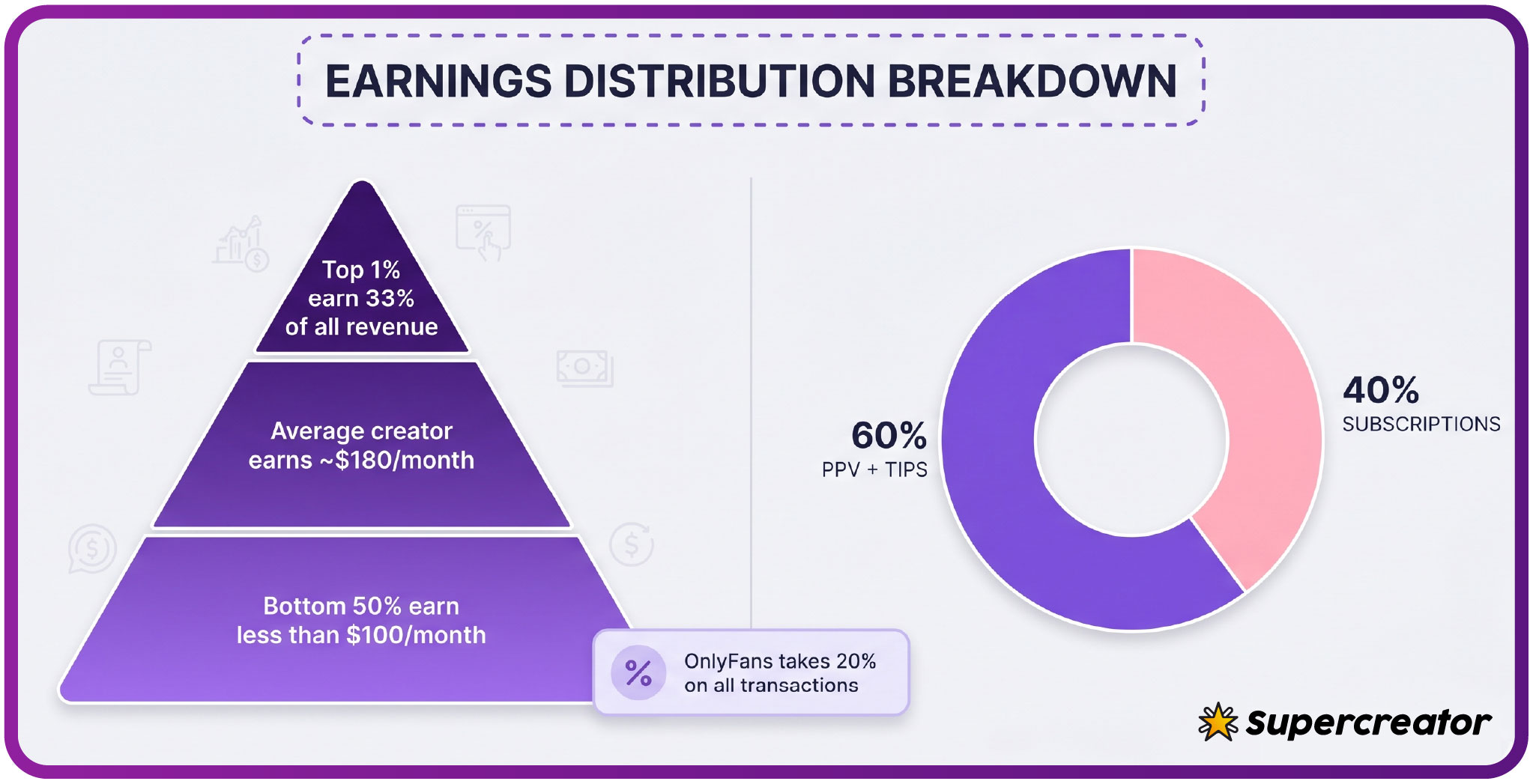
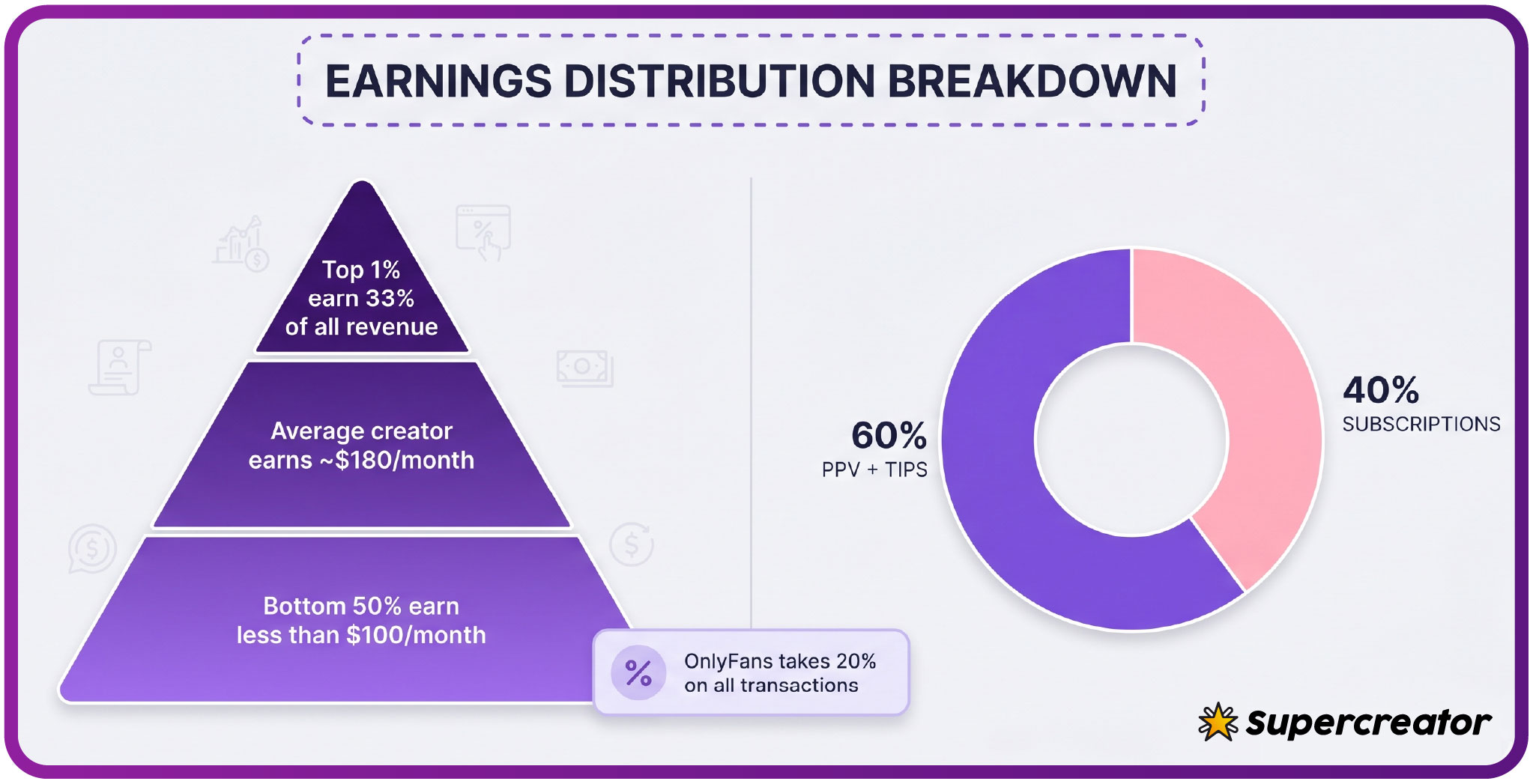
There is no base price below $4.99 on the platform, though promotional first months may dip below that figure. OnlyFans also takes a 20% fee on everything, including subscriptions, tips, and pay-per-view unlocks, and the creator keeps 80%. These facts matter because they explain why creators price the way they do and why a subscriber’s split should account for price changes over time. A budget that ignores the platform’s structure will drift.
Deciding the total first
Set the monthly number before looking at any page. The budget should lead the choices, not follow them. When a subscriber opens a page first and decides afterward what to spend, the total creeps upward with each renewal. A written number at the top of a note or spreadsheet removes that drift.
The total should be an amount that does not affect rent, bills, or savings. Treat it the same way as any other fixed monthly category. Once the number is fixed, every page receives a share rather than a standalone purchase.
The table below shows the signals that indicate a healthy budgeting process compared with a poor one.
| Signal | Good example | Poor example |
|---|---|---|
| Decision timing | Total set on the first day of the month | Total reviewed only when the bank balance looks low |
| Page selection | Pages chosen after the total is confirmed | Pages added first, total adjusted to fit them |
| Renewal awareness | Renewal dates listed next to each page | Renewals discovered through charges |
| PPV planning | A separate line for unlocks and tips | Unlocks charged to the subscription share |
| Price changes | Noted and absorbed within the same total | Treated as an exception and added on top |
A table of pages and allocations
Once the total is fixed, list every page in one place. Each row should show the page, its current price, and its share of the total. This makes overlap and gaps visible before any money moves.
A page priced at $4.99 might receive a small share, while a page at $15 receives a larger one. The point is not to equalise payments but to keep the sum inside the total. Naming the pages is not necessary here; the structure matters more than the specific entries.
The example below uses placeholder pages and placeholder figures to show the format.
| Page | Monthly price | Share of total |
|---|---|---|
| Page A | $4.99 | $5 |
| Page B | $9.99 | $10 |
| Page C | $15.00 | $15 |
| Unlocks and tips | Variable | $20 |
| Total | — | $50 |
This layout keeps every cost visible at once. It also makes it obvious when a new page would push the total past the limit. Sites such as BestOnlyFans publish comparisons that help subscribers identify which pages fit a given range.
Handling price differences
Prices vary widely, so a fair split is not always an equal split. One page may cost $4.99 while another sits near the maximum of $49.99. The higher-priced page needs a larger share if it is to remain in the budget at all.
The practical steps below describe an order that keeps the total intact.
- Write the total for the month first.
- List every page with its current price.
- Assign each page a share that reflects its price.
- Add the shares and compare the sum with the total.
- Remove or reduce the lowest-value page if the sum exceeds the total.
- Leave a small buffer for price changes.
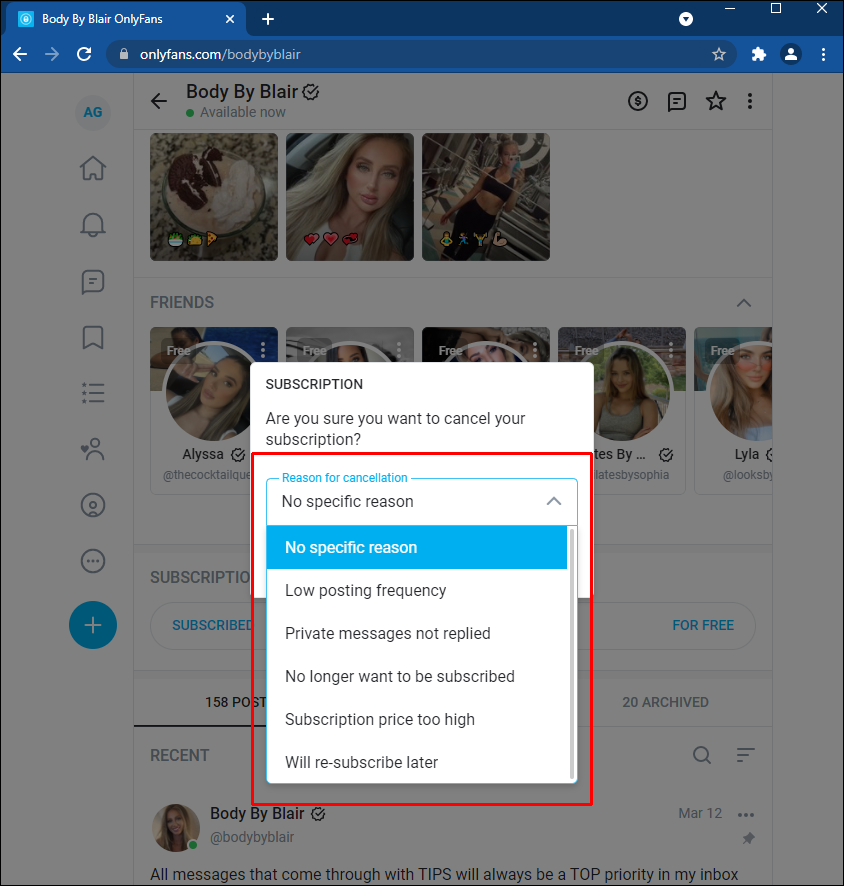
A buffer matters because a creator can raise the subscription price at any time. When that happens, auto-renew stops and existing access lasts only until the current paid period ends. A subscriber who has planned for that possibility can decide calmly whether the new price still fits the split. For a starting point, best onlyfans top 10 collects free pages.

Overlap and duplicate spending
Two pages can show similar material without the subscriber noticing. Renewals can also land on the same day, which concentrates spending and makes the total harder to track. A short check before the month starts prevents both problems.
- Compare the type of posts each page publishes before subscribing to both.
- List renewal dates and spread them across the month where possible.
- Check whether two pages share the same promotional offers or bundles.
- Remove any page that has not been opened in the past month.
- Note which pages rely mostly on pay-per-view messages rather than feeds.
Free pages belong in this check as well. Because they earn through pay-per-view messages and tips, their cost appears later in the month rather than at renewal. A free page can therefore consume more than a paid one if unlocks are not tracked.
A practical tip: write the unlock and tip total for each page next to its subscription price. Many subscribers find that a free page costs more per month than a paid one once pay-per-view messages are counted.
The platform fee of 20% applies to subscriptions, tips, and pay-per-view unlocks alike. The creator keeps 80%. This does not change what a subscriber pays, but it explains why creators push pay-per-view so often.

PPV and tips inside the split
Unlocks and tips should sit on a separate line rather than inside a page’s subscription share. If they are charged to the subscription share, a single unlock can wipe out the amount reserved for that page. A separate line keeps the subscription side stable.
- Subscription renewals, which repeat every month.
- Pay-per-view unlocks, which vary by page and by month.
- Tips, which are optional but often prompted by messages.
- Promotional first months, which may sit below the $4.99 minimum.
- The buffer for price increases and new pages.
When the costs are separated this way, the total remains the same but the internal split becomes clearer. A subscriber can then decide whether to reduce a subscription or reduce unlocks.
Security settings are worth a quick look during this step. Two-step authentication protects the account that holds the payment details. That matters more when several pages and several renewals are linked to one card.
Mid-month adjustments
A price change after the split is set does not break the budget if the response is planned. Auto-renew stops when the creator raises the subscription price, and access continues until the current paid period ends. The subscriber then has a full period to decide.
The mistakes below are the ones that most often push a total past its limit.
- Adding a new page without removing an existing one.
- Charging unlocks to a subscription share instead of a separate line.
- Ignoring a price increase because the current period has not ended.
- Keeping a page that has not been opened in weeks.
- Using promotional first-month pricing as the expected monthly cost.
- Leaving no buffer for tips.
The platform has no built-in discovery feed or directory. That is why ranking sites exist and why subscribers often find pages through outside lists, including best onlyfans top 10 roundups. A new page found this way should be added only if it replaces another or fits the buffer.
BestOnlyFans and similar comparison pages can also help a subscriber check whether a price is typical. If a page sits far above the average range of $5 to $10, the share assigned to it should reflect that before the month begins.
Monthly review steps
The split improves only if it is reviewed. A short comparison of planned and actual spending at the end of each month shows where the total leaked.
- Compare the planned share with the actual charge for each page.
- Total the unlocks and tips for the month.
- Note any page that raised its price during the period.
- Remove pages that did not justify their share.
- Reset the total for the coming month.
- Record the new split before any renewal date arrives.
BestOnlyFans articles on pricing can serve as a reference when a subscriber is unsure whether a page’s cost is normal. The review takes only a few minutes but prevents the same overspend from repeating.
FAQ
Can a subscription cost less than $4.99?
No base price sits below $4.99. Only promotional first months may dip below that figure.
How do free pages make money?
Free pages set the price to $0 and earn through pay-per-view messages and tips.
What happens when a creator raises the price?
Auto-renew stops, and existing access lasts until the current paid period ends.
How much does the platform take?
OnlyFans takes 20% of subscriptions, tips, and pay-per-view unlocks, and the creator keeps 80%.